


[ad_1]
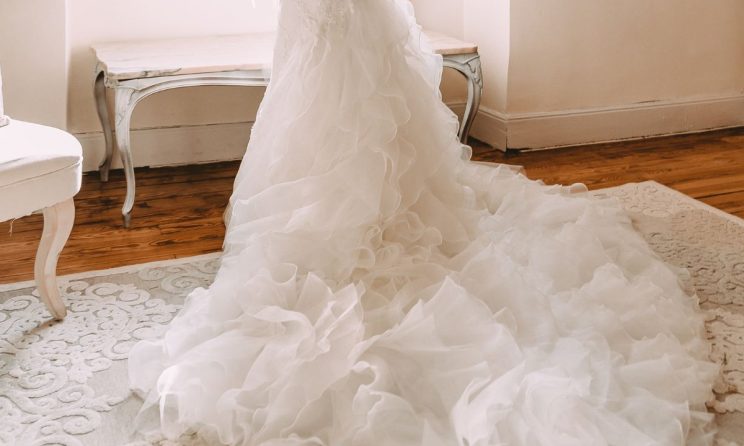
The right wedding dress train can add a magical touch to your bridal look, making your entrance down the aisle even more memorable.
From short and subtle to long and dramatic, there’s a train style for every type of wedding and bride.
But with so many options, it can be tricky to figure out which one is the best fit for you.
Today, we will break down the different types of wedding dress trains, what to consider when choosing one, and how to make sure your train fits seamlessly into your big day—both in style and practicality.
Key Takeaways
The length of your train can influence the overall look and formality of your wedding dress.
Fabric selection affects how your train drapes and suits different lengths.
Bustling your train is essential for easy movement during the reception.
Understanding Wedding Dress Trains
A wedding dress train brings elegance and flair to your bridal look.
The right train not only complements your gown but also adds a sense of occasion to your walk down the aisle.
Trains come in various lengths and styles, each with its unique appeal and historical significance – we’ll take a look at all of this in more detail below.
The History Behind Trains
Wedding dress trains have a long and storied history, dating back to medieval times when they were used as a clear symbol of wealth, power, and social status. The longer the train, the higher the bride’s rank and affluence.
In royal courts and aristocratic families, brides would wear gowns with dramatic, sweeping trains to make a grand statement. The train’s length and extravagance often reflected the bride’s family’s standing in society.
For noblewomen, a long train was a public display of their family’s influence and wealth, signaling to everyone present that they came from an elite background.
This symbolism wasn’t just about luxury and fashion—it was also practical in the sense that only the wealthiest could afford a train-bearer or ladies-in-waiting to help manage these long, heavy extensions of the gown.
These women would follow the bride, often lifting and carrying the train as she made her way down the aisle. It was a highly coordinated affair, adding to the sense of grandeur and importance of the wedding day.
By the 19th century, as society evolved, wedding dress trains became more widely adopted across social classes.
No longer reserved only for royalty or the upper echelons of society, brides from various backgrounds began to incorporate trains into their bridal attire.
During this period, trains took on new meanings, symbolizing not just wealth and status but also purity and the transition from maidenhood to married life.
White wedding dresses, which had been popularized by Queen Victoria’s marriage to Prince Albert in 1840, became a symbol of innocence and virtue.
The addition of a train heightened the ceremonial aspect of the gown, making the bride’s entrance even more impactful.
Royal weddings have always set the bar for bridal fashion, often featuring some of the most memorable and extravagant trains in history.
Queen Victoria’s 1840 wedding gown, with its rich silk-satin fabric and modest but elegant train, influenced bridal fashion for generations.
Other royal brides, such as Princess Diana in 1981, made headlines with their awe-inspiring trains. Diana’s wedding gown, designed by David and Elizabeth Emanuel, featured an impressive 25-foot-long train, which remains one of the most iconic bridal looks in history.
The train of her dress wasn’t just a fashion statement—it was a symbol of the grandeur and historic significance of the event itself.
Even today, royal and celebrity weddings continue to inspire brides worldwide to embrace the drama and elegance of a train.
More recent examples include Kate Middleton’s wedding to Prince William in 2011, where she wore a classic gown with a 9-foot train, and Meghan Markle’s wedding to Prince Harry in 2018, where her understated but regal 16-foot silk tulle veil added a contemporary twist to the traditional train.
While the train’s role has evolved over time, its presence in bridal fashion remains as significant as ever.
Whether it’s a subtle sweep train for a casual garden wedding or a grand cathedral train for a formal ceremony, the train continues to bring a sense of tradition, sophistication, and importance to a bride’s wedding day.
It’s a reminder of the historical significance of the occasion and a nod to centuries of bridal fashion that have influenced the modern gown.
Today, the decision to wear a train is not so much about status or class but about the desire to create a moment of unforgettable beauty and elegance.
For many brides, the train serves as a symbol of the once-in-a-lifetime nature of their wedding day, adding a touch of magic and formality that’s deeply rooted in history.
Whether short or long, simple or elaborate, a train still manages to make a bride’s entrance something truly special.
Defining Train Lengths
Wedding dress trains can range from subtle to extravagant, depending on the style you’re after.
The sweep train just barely brushes the floor, ideal for brides looking for a touch of elegance without the hassle.
A court train falls about 3 feet from the waist, providing a more traditional look.
The chapel train—one of the most popular options—measures between 3 to 4 feet and strikes the perfect balance between style and ease of movement.
If you’re going for a grand entrance, the cathedral train, which extends 6 to 7 feet behind you, creates an undeniably dramatic effect.
The most extravagant of all, the monarch train, can measure up to 12 feet or more, as seen in some of the most iconic royal weddings, including Princess Diana’s 25-foot train.
When selecting a train length, it’s essential to think about your venue and how comfortable you’ll be moving around.
Longer trains might look stunning but often require extra hands for assistance or bustling for the reception.
Popular Types Of Trains
The sweep train adds just a touch of extension beyond the dress, creating a clean, minimalistic look that’s easy to manage and appropriate for various wedding styles.
A chapel train offers a slightly more formal feel without overwhelming the overall look of your gown, making it versatile for different venues and dress codes.
For a truly regal effect, the cathedral train makes a bold statement, especially suited for grand venues and formal ceremonies. It pairs beautifully with ball gowns and A-line silhouettes.
The Watteau train, a cape-like style that drapes from the shoulders, offers a unique, detachable option for brides seeking something different.
The puddle train, which softly pools around the feet, delivers a more ethereal and romantic effect, particularly suited to beach or garden weddings.
How To Choose The Right Train For Your Dress
Choosing the right train for your wedding dress is key to making your bridal vision come to life.
The length, style, and material of the train will play a major role in how your dress looks and feels throughout the day.
Consider Your Venue And Theme
Your venue is one of the biggest factors when deciding on your train length.
For outdoor ceremonies, shorter trains are often a better option to avoid dragging fabric through dirt, sand, or grass.
If you’re planning a beach wedding, lightweight materials that won’t weigh you down are ideal.
For indoor weddings with a long aisle, such as in a cathedral or ballroom, a longer train like a cathedral or monarch can really complement the grandeur of the setting.
However, for more intimate or casual ceremonies, shorter trains like a sweep or chapel are more practical.
Your wedding theme also plays into this decision. A more formal event may call for a longer train to match the grandeur of the occasion, whereas a garden party or rustic wedding may look better with a simpler court or puddle train.
Match The Train To Your Dress Silhouette
The silhouette of your dress will influence how well a certain train style works with your overall look.
Dresses with fuller skirts, such as A-line or ball gowns, tend to suit longer, more dramatic trains. This creates a sense of balance and adds to the drama.
If you’re wearing a more fitted dress like a mermaid or trumpet style, a chapel or sweep train will offer a sleeker, more streamlined look while still adding some elegance.
For brides who prefer a more minimalist style, sheath dresses typically work best with shorter trains like the sweep or court styles.
Consider Comfort And Practicality
While the aesthetic of your train is important, comfort should also be a key consideration.
Longer trains can be heavy and tricky to manage, so think about how you’ll feel throughout the day. If you’re not used to handling extra fabric, a shorter train might be more practical.
Also, factor in the weight of the fabric itself. Heavier materials like satin and brocade are better suited for structured trains, while lighter fabrics like chiffon or tulle work well for softer, flowing styles.
And don’t forget, you’ll likely want to move around freely during the reception—this is where bustling or detachable trains come in handy.
At the end of the day, the most important thing is that you feel confident and comfortable. Your train should enhance your look, not make you feel restricted.
Adding Personal Touches To Your Train
Customizing your wedding dress train is an excellent way to make your gown uniquely yours.
From embellishments to detachable options, there are many ways to put your personal stamp on your train.
Adding Embellishments
Whether it’s lace, beading, or sequins, adding a few embellishments to your train can really take your dress to the next level. A little sparkle or a delicate lace edge can create a beautiful focal point, especially for photos.
You might also want to consider incorporating family heirlooms or meaningful details into your dress for a truly personal touch.
Be mindful not to overdo it—too many embellishments can take away from the overall elegance of the gown.
Work closely with your seamstress to find the right balance and ensure that any added elements complement your dress’s original design.
Opting For A Detachable Train
Detachable trains are a versatile option that lets you have the best of both worlds. You can have a dramatic, show-stopping train for the ceremony and then remove it for the reception, allowing you to move around more easily.
Detachable trains typically attach with buttons or hooks and can be made in different lengths and styles to suit your overall look.
This flexibility is great for brides who want a grand entrance but also want to dance the night away without worrying about tripping over their train.
Bustling Your Train For The Reception
Once the ceremony is over, you’ll want to move around freely without worrying about your train getting in the way.
Bustling helps by gathering the fabric and securing it so you can enjoy your reception without losing the elegance of your dress.
Common Bustle Styles
There are several bustling options to choose from, depending on the style of your gown:
The American (over-bustle) lifts the train and pins it over the back of your dress, creating a cascading effect.
The French (under-bustle) tucks the train underneath, resulting in a layered, voluminous look.
The Austrian bustle gathers the train into swags, offering a romantic draped effect.
A ballroom bustle works well for fuller skirts, with multiple pick-up points distributing the train’s weight evenly.
Choosing The Right Bustle
The right bustling method depends on your dress design and the train’s length and weight.
Work with your seamstress to figure out which style complements your gown and provides the most practicality for your reception.
It’s also a good idea to practice bustling with a friend or bridesmaid ahead of time so they can help you on the big day.
Accessorizing Your Train
Once you’ve selected your train, you’ll want to think about how it fits into your overall bridal look. The right veil, shoes, and jewelry can complement your train and complete your wedding day ensemble.
Veil Choices
Your veil should harmonize with your train. For a cathedral train, opt for a long, dramatic veil that either matches or exceeds the length of your train for a cohesive look.
A sweep or court train pairs well with a shorter veil, such as a fingertip or elbow-length option.
Footwear And Jewelry
Your shoes should not only complement your dress but also be comfortable enough to manage a long day.
For longer trains, more formal shoes like pumps or embellished flats are ideal, while shorter trains may allow you to be more flexible with your footwear choice.
When it comes to jewelry, the neckline of your dress and overall design should guide your decision.
For strapless gowns, a statement necklace can make a bold impact, while for higher necklines, simple earrings or bracelets are often more fitting.
Our Final Word
Choosing the right wedding dress train is a personal decision that reflects your style, the type of wedding you’re planning, and how you want to feel on your big day.
Whether you’re leaning toward something simple like a sweep train or making a grand statement with a cathedral train, your choice will add that extra touch of elegance to your gown.
Understanding the different options and how they fit with your dress and venue helps make the decision easier.
In the end, the most important thing is finding a train that feels right for you so you can walk down the aisle feeling confident and excited for what’s ahead.
Frequently Asked Questions
What are the different types of wedding dress trains?
Wedding dress trains include sweep, chapel, cathedral, and monarch styles. Sweep trains extend just a few inches behind the gown, perfect for casual or outdoor weddings. Chapel trains measure 3 to 4 feet long, while cathedral trains are longer and more formal. The monarch train is the longest, often seen in royal weddings.
How can you determine the right length for a wedding dress train?
Consider your venue, wedding style, and comfort level when choosing a train length. For outdoor or casual weddings, shorter trains like sweep or chapel work well. Formal indoor ceremonies can accommodate longer trains. Try on different lengths and see how they feel when you walk and turn.
What is the difference between a sweep train and a chapel train on a wedding dress?
A sweep train gently grazes the floor, extending just a few inches behind the gown. It adds a touch of elegance without overwhelming the bride. A chapel train is longer, typically extending 3 to 4 feet from the waist. It’s suitable for semi-formal to formal weddings and offers a more dramatic look.
Are detachable trains available for wedding dresses, and how do they work?
Yes, detachable trains are available for wedding dresses. They attach to the waist or back of the dress using hooks, buttons, or zippers. This option allows you to have a dramatic look for the ceremony and easily remove the train for a more comfortable reception experience.
How do you properly bustle a wedding dress train for the reception?
Bustling involves lifting and securing the train to make movement easier during the reception. Common bustle types include the American bustle (over-bustle) and the French bustle (under-bustle). Your seamstress can recommend the best bustle style for your dress and show you or a trusted friend how to secure it.
Can you explain the Watteau train and how it differs from other train styles?
The Watteau train is a unique style that flows from the shoulders like a cape. Unlike traditional trains that extend from the waist or hem, the Watteau train creates a floating, ethereal effect. It can end at various lengths and offers a modern, romantic look that’s distinct from other train styles.
[ad_2]
Source link


